MCP Explained: How AI Agents Are Starting to Run Your Social Media
A year ago, using AI for social media meant copy-pasting a prompt into ChatGPT and pasting the output somewhere else. Today, AI agents can directly read your brand guidelines.
Overview
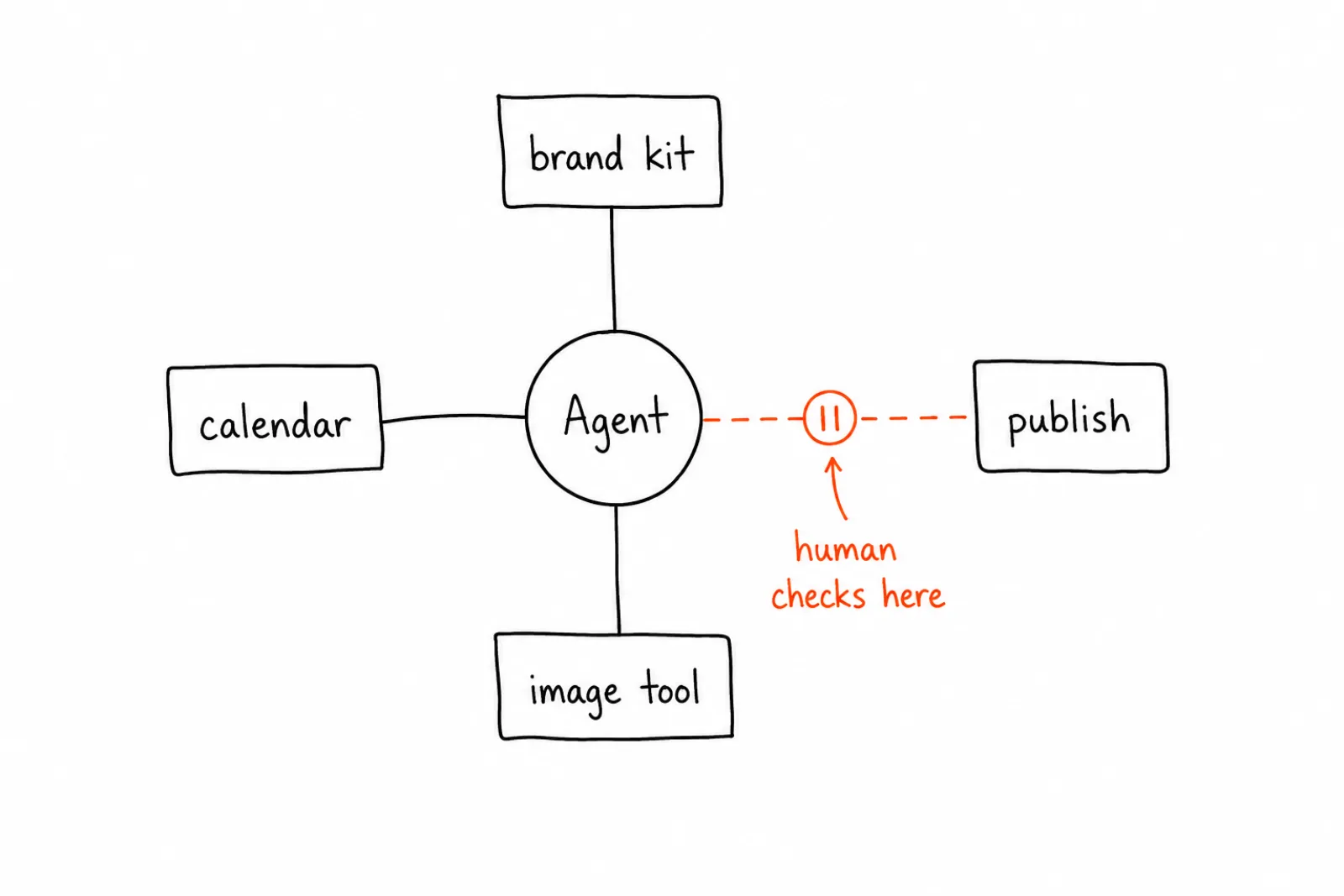
Here's what MCP actually is, why it matters for content and social media specifically, and what's realistic to expect from AI agents running parts of your workflow right now versus what's still overhyped.
What MCP Actually Is
Model Context Protocol is an open standard that lets AI models connect directly to external tools and data sources, your file system, a database, a scheduling platform, a design tool, through a consistent interface. Before MCP, every AI tool integration was custom-built: a developer had to write specific code to connect an AI model to each individual service. MCP standardizes that connection, so an AI agent can discover and use a new tool the same way it uses any other, without custom integration work for every single connection.
In practical terms: instead of manually copying an AI-generated caption from ChatGPT into a scheduling tool, an MCP-connected AI agent can generate the caption and place it directly into a content calendar, check brand guidelines before generating, and in some cases publish it, all within one workflow.
Why This Matters Specifically for Social Media and Content
Content workflows involve exactly the kind of multi-step, multi-tool process MCP is built for: pull brand guidelines, generate an asset, check it against brand rules, schedule it, publish it. Before MCP-style connections, each of these was a separate manual handoff between tools. An AI agent with the right connections can now execute the whole chain, with a human reviewing at checkpoints rather than performing every step.
What AI Agents Can Reliably Do Right Now
Generate content that reads a structured brand kit. Agents connected to a brand kit or style guide produce meaningfully more consistent output than prompt-only generation, because the brand context is available every time, not re-explained each session.
Draft and stage content for review. Agents can pull research, draft captions, generate accompanying images, and place everything into a content calendar ready for a human to approve, a genuinely useful and reliable capability today.
Handle repetitive, well-defined tasks. Resizing content for multiple platforms, applying consistent formatting, and organizing a content calendar are tasks agents handle reliably because the rules are clear and the outcome is easy to verify.
What's Still Overhyped
Fully autonomous publishing without review. Agents can stage and prepare content reliably, but autonomous publishing without a human checkpoint still carries real risk, brand mismatches, factual errors, or tone issues that a quick human review would catch. Most mature workflows keep a human approval step even when everything else is automated.
Real-time engagement and replies. AI agents responding to comments or DMs in real time as a person is both a trust risk and, on many platforms, against terms of service if not disclosed. This remains a task that should stay human regardless of what's technically possible.
Full strategic decision-making. Agents can execute a defined content strategy well. They're much less reliable at defining that strategy from scratch, understanding brand positioning, audience nuance, and business goals still benefits from human judgment.
Common Mistakes When Adopting Agent-Driven Workflows
Giving an agent publish permissions before trusting its output quality. Start with draft-and-review, expand to more autonomy only after the agent's output has proven consistently reliable over time.
Not providing structured context. An agent without a proper brand kit or clear guidelines produces the same generic output as any prompt-only tool. The connection only helps if there's real structured information for the agent to use.
Assuming more automation is always better. The right amount of automation depends on how much risk a mistake carries. A daily educational post has a different risk profile than a client-facing announcement, treat them differently.
Ignoring the audit trail. Agent-driven workflows should be easy to review after the fact, what was generated, what was approved, what was published. Skipping this makes it hard to catch and correct patterns of error.
How to Start Using Agent-Driven Content Workflows
- Set up a real brand kit or style guide first. This is the structured context that makes agent output reliable instead of generic.
- Start with draft-and-review, not autonomous publishing. Let the agent generate and stage content, keep a human approval step for now.
- Pick low-risk content types first. Educational or evergreen posts are a safer starting point than announcements or time-sensitive content.
- Track output quality over several weeks. Look for consistent brand alignment and factual accuracy before considering expanding the agent's autonomy.
- Keep engagement and replies human, regardless of how automation elsewhere is working.
What Not to Automate
Don't let an agent publish without any human checkpoint on content that represents your brand publicly, and don't automate engagement or replies as though the agent is a person. These aren't just caution, they're where trust actually breaks when automation goes wrong.
How to Review Agent Output Without Becoming the Bottleneck
The human checkpoint only works if reviewing is faster than doing the work yourself. If every agent-generated draft takes ten minutes to check, you have added a step rather than removed one. The fix is a fixed, short review pass that looks for the specific things agents get wrong, instead of re-reading everything as though it were unwritten.
Check the facts first, because they are the only errors you cannot fix later. Names, dates, numbers, product claims, and anything quoted from a source. A tone problem is embarrassing; a wrong claim published under your brand is a correction you have to issue publicly.
Then check brand fit against the brand kit, not against your instinct. If the draft breaks a rule, ask whether the rule is actually written down in the structured context the agent reads. If it is not, the agent had no way to follow it, and the fix is updating the brand kit rather than rewriting the post.
Then read it once for whether a person would want to read it. Agent drafts fail here in predictable ways: openings that restate the topic before saying anything, sentences that hedge, and a middle section that repeats the first one. These are quick to spot and quick to cut.
Log what you changed, not just that you approved it. Over a few weeks the pattern of edits tells you what the agent is consistently missing. If you fix the same thing every time, that fix belongs in the brand kit or the instructions, not in your review pass. Recurring edits are the signal that the setup needs work; one-off edits are just editing.
Where to Start
AI agents aren't replacing the judgment calls in content strategy, they're removing the manual handoffs between steps that already had clear rules. See how brand kit context makes agent-generated content more reliable, or check pricing for teams exploring this workflow.
FAQ: MCP Explained
Related in spirit, but MCP is a broader, open standard designed to work across different AI models and tools, not tied to one company's ecosystem.
Related Guides
Apr 26, 2026 · 10 min read
How to Post to 9 Platforms at Once
Stop logging in 9 times. Schedule everything, Instagram, TikTok, YouTube, LinkedIn, and more, from one place.
Apr 26, 2026 · 7 min read
How to Post to Instagram and TikTok at Once
Upload once and publish to both Instagram and TikTok simultaneously. No double-uploading, no app switching.
May 19, 2026 · 8 min read
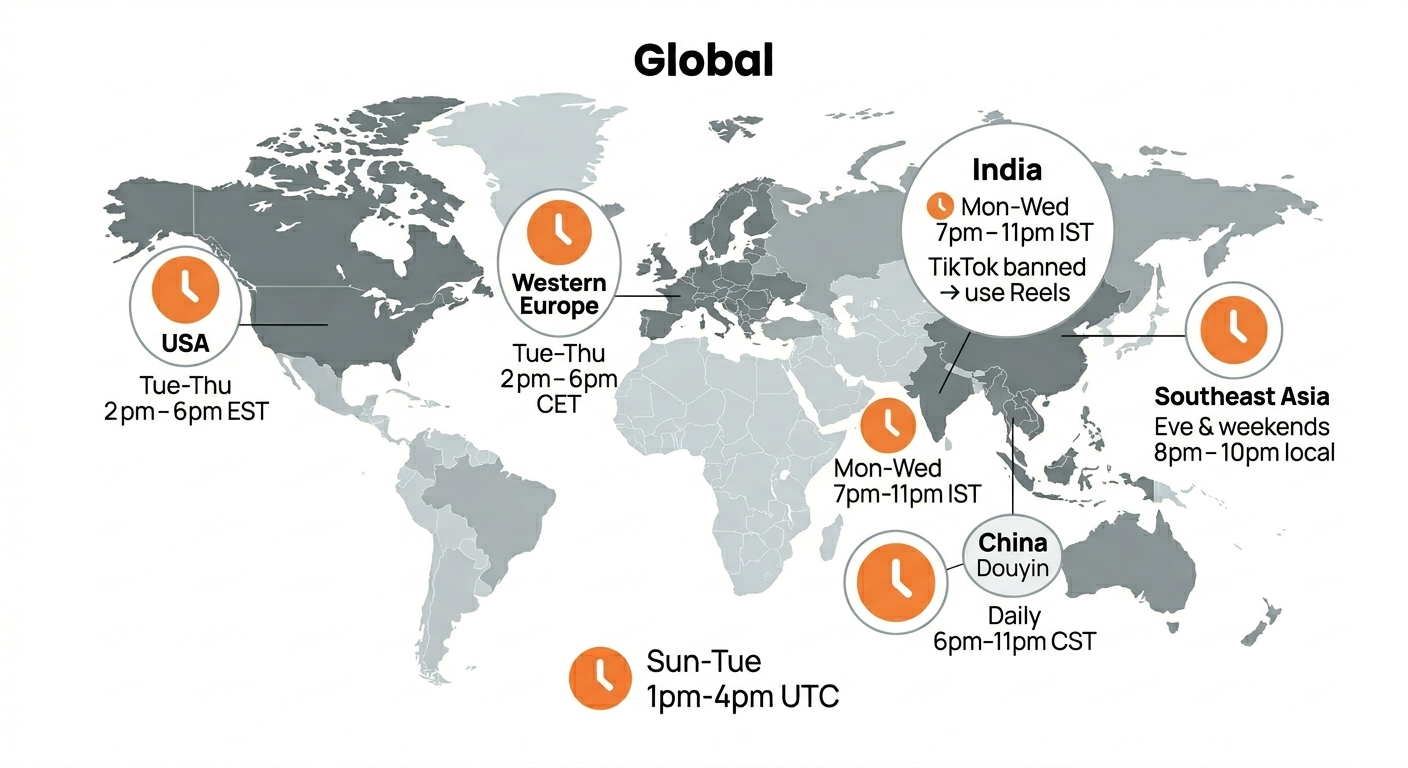
Best Time to Post on TikTok in 2026 (By Region)
Data from 2 billion TikTok engagements. Best posting times broken down by region, USA, Europe, Southeast Asia, and global audiences.
Your brand. One platform. Always on
Create, edit, and post from a single studio.
Start for freeSchedule every platform from one place, automatically.