How E-commerce Brands Automate Product Content Across Instagram, TikTok, and Pinterest
You launch a new product and suddenly need a product shot for Instagram, a demo video for TikTok, and a styled pin for Pinterest, each with different dimensions, different pacing.
Overview
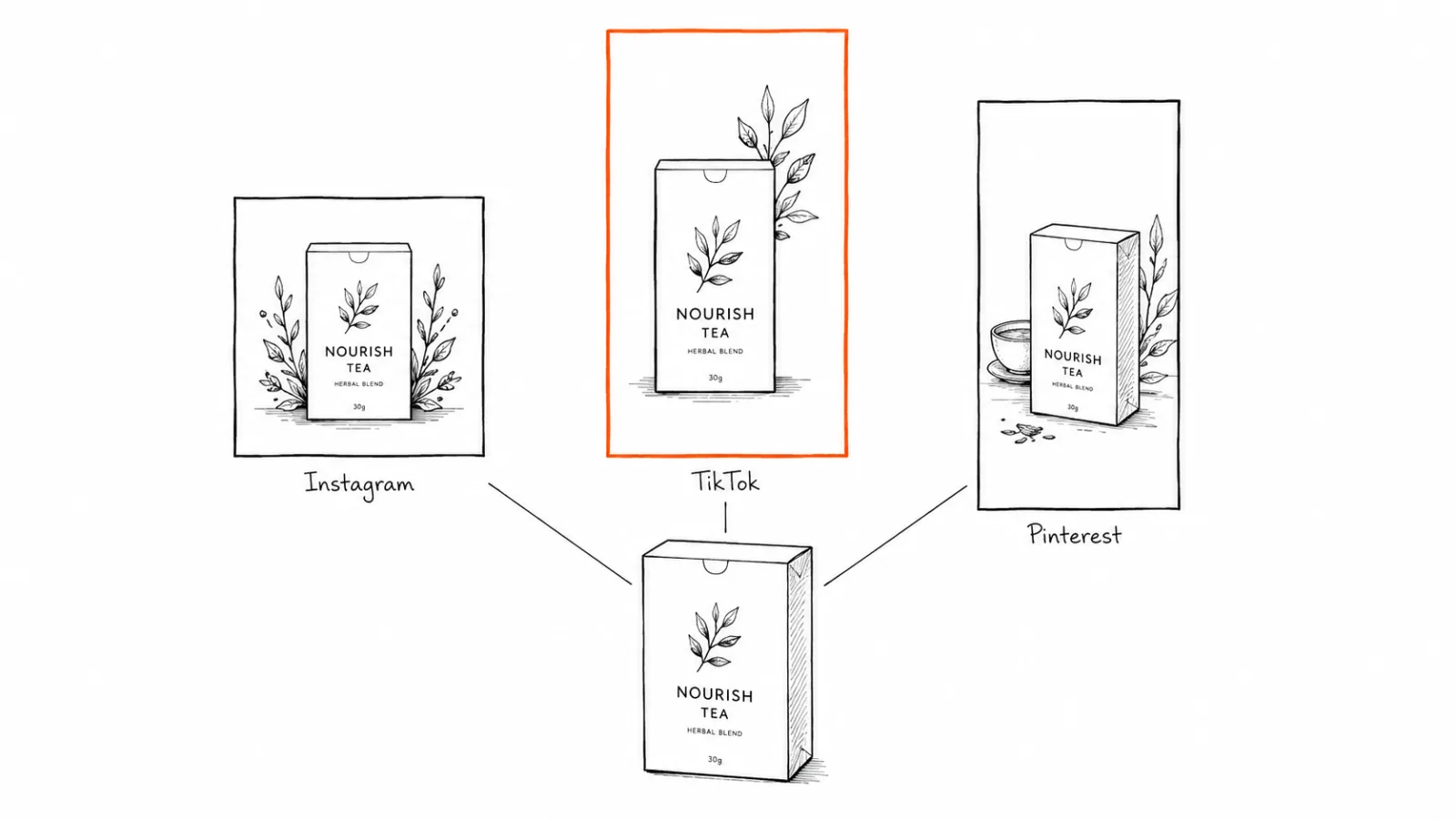
Ecommerce content has a volume problem that most content tools weren't built for. Here's how brands without an in-house design team actually keep up.
Why Ecommerce Content Is Different From Other Content
Most content advice assumes you're producing opinion pieces, tips, or brand storytelling, content where the subject is flexible. Ecommerce content is constrained: the product has to look accurate, on-brand, and appealing across formats that each favor different things. Instagram rewards polished, styled product shots. TikTok rewards demo-style, less polished video. Pinterest rewards vertical, aspirational styling with the product clearly visible. One photo shoot rarely serves all three well without adaptation.
The Volume Problem Specific to Ecommerce
A content creator or B2B brand might post a handful of times a week. An ecommerce brand with 50 SKUs, seasonal drops, and restock announcements needs content at a completely different scale, and each piece needs to look like it belongs to the same brand as the last one. This is where manual production breaks down first: not the creative concept, but the sheer repetition of applying it correctly across products and platforms.
Benefits and Tradeoffs of Manual Product Content
Full control over every shot. A professional product photographer or videographer captures exactly the angle, lighting, and styling you want. Tradeoff: this doesn't scale to 50 SKUs without proportionally scaling cost and time, and most ecommerce brands don't have that budget per product.
No dependency on AI generation quality. Real photography avoids any AI-generation inconsistency entirely. Tradeoff: reshooting for every platform format, square, vertical, landscape, multiplies the production cost per product.
Benefits and Tradeoffs of Automated Product Content
Consistent brand styling across every SKU. Once a brand kit is set, colors, backgrounds, and styling apply automatically to every generated asset. Tradeoff: highly specific product details, exact texture, fine print, precise fit, sometimes need a real photo as the base rather than a fully generated image.
Speed at volume. Generating content for 50 SKUs across 3 platforms is a fundamentally different task with automation than with manual production, hours instead of weeks. Tradeoff: initial brand kit setup and product photo sourcing still requires upfront work.
Common Mistakes Ecommerce Brands Make
Using the same asset across all platforms unchanged. A square Instagram product shot cropped awkwardly into TikTok's vertical format looks amateurish and underperforms. Adapt the composition per platform, don't just resize.
Ignoring platform-native content styles. Overly polished, ad-like content underperforms on TikTok specifically, where demo-style and slightly rougher content often outperforms. Pinterest rewards the opposite: highly styled, aspirational imagery.
No consistent visual system across SKUs. When each product's content looks like it came from a different brand, it undermines trust at the exact moment a shopper is deciding whether to buy.
Underusing existing product photography. Brands that already have a base product photo often over-invest in reshooting instead of using AI-assisted variation to adapt existing assets across formats and seasonal themes.
Skipping a review step at volume. Automation makes it easy to generate a lot of content quickly. Skipping quality review because volume feels handled is how off-brand or inaccurate product depictions reach customers.
Platform-Specific Technical Details
| Platform | Ideal format | Style that performs | Video length |
|---|---|---|---|
| Square or 4:5 | Polished, styled | Reels: 15-90s | |
| TikTok | 9:16 vertical | Demo-style, less polished | 15s-10min |
| 2:3 vertical | Aspirational, product clearly visible | N/A, mostly static |
Implementation Roadmap
- Set up a brand kit with your exact product photography style. Colors, backgrounds, and typography that match your existing brand, not generic defaults.
- Establish one base asset per product. A clean product photo or 360-degree shot becomes the source for platform-specific variations.
- Generate platform-adapted versions, not resized copies. Square for Instagram, vertical demo-style framing for TikTok, styled vertical for Pinterest.
- Build a lightweight review step into the workflow. Even at high volume, a quick accuracy check before publishing catches misrepresented products before they reach customers.
- Batch by product launch or seasonal push. Generate all platform variants for a product at once rather than platform by platform across multiple sessions.
What Not to Automate
Don't automate product accuracy claims, size, materials, availability, without human verification, misrepresenting a product in AI-generated content creates real return and trust problems. Automate the styling and formatting. Keep factual accuracy human-checked.
How to Tell Whether the System Is Working
Volume is easy to measure and easy to mistake for progress. Once you can produce three platform variants per SKU in an afternoon, output stops being the constraint, so it stops being a useful signal. Measure the things that tell you whether the content is doing its job, and measure them per platform rather than as one blended number.
Judge each platform on the behaviour it is good at. Instagram tells you whether the styling reads as trustworthy, so watch saves and profile visits on product posts. TikTok tells you whether the demo actually explains the product, so watch how far people get through the video before dropping off. Pinterest tells you whether the pin earns discovery over time, so check outbound clicks weeks after publishing, not on day one. A pin that looks flat in its first week can still be your best traffic source three months later.
Tie content back to product pages, not just to the feed. Use a distinct link or campaign tag per platform so you can see which one sends people who actually reach a product page and add to cart. Without that, you are comparing likes across networks that count engagement differently and drawing conclusions from noise.
Compare variants of the same product, not different products across the same week. Two SKUs sell at different rates for reasons that have nothing to do with your content. If you want to know whether the demo-style TikTok framing beats the polished version, run both for the same product and let each accumulate a comparable number of views before deciding.
Watch the returns and questions, not only the analytics. For ecommerce, the clearest sign that generated content has drifted from the real product is a rise in size, colour, or material questions in comments and support tickets, or returns citing "not as pictured." That feedback arrives before any performance metric moves, and it points straight at the assets that need a real base photo instead of a generated variation.
Set a review cadence that matches your output. Pull a random sample of published assets each week, roughly one in ten, and check three things against the product page: the colour is right, the visible details match the item you actually ship, and the caption makes no claim about materials, sizing, or availability that nobody verified. Log what fails. If the same failure appears twice, the fix belongs in the brand kit or the base photo, not in another round of manual corrections.
Where to Start
Ecommerce content isn't a creativity problem, it's a volume and consistency problem. See how a brand kit handles that at scale, or check pricing for teams managing multiple SKUs.
FAQ: How E-commerce Brands Automate Product Content Across Instagram, TikTok, and Pinterest
For styling variations and platform adaptations, yes in many cases. For capturing exact product details like texture or fit, a real base photo still produces more reliable results than a fully generated image.
Related Guides
Apr 26, 2026 · 10 min read
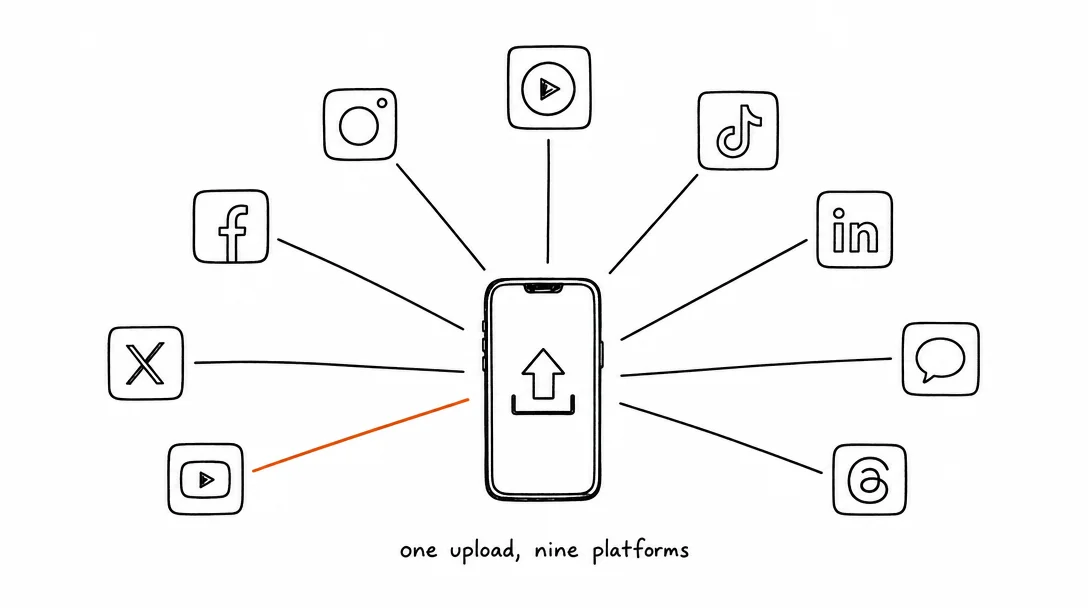
How to Post to 9 Platforms at Once
Stop logging in 9 times. Schedule everything, Instagram, TikTok, YouTube, LinkedIn, and more, from one place.
Apr 26, 2026 · 7 min read
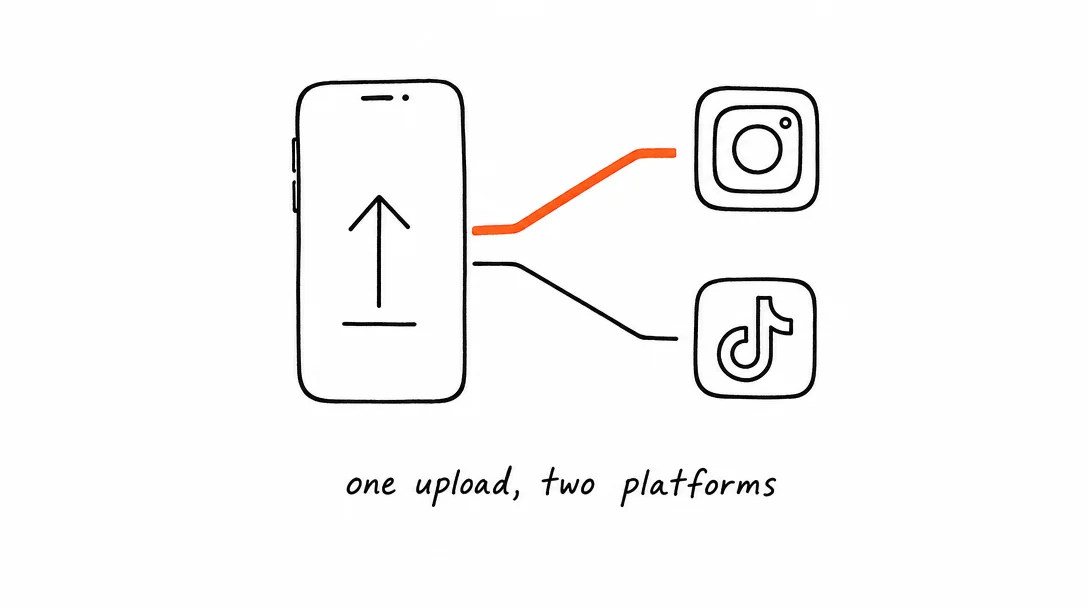
How to Post to Instagram and TikTok at Once
Upload once and publish to both Instagram and TikTok simultaneously. No double-uploading, no app switching.
May 19, 2026 · 8 min read
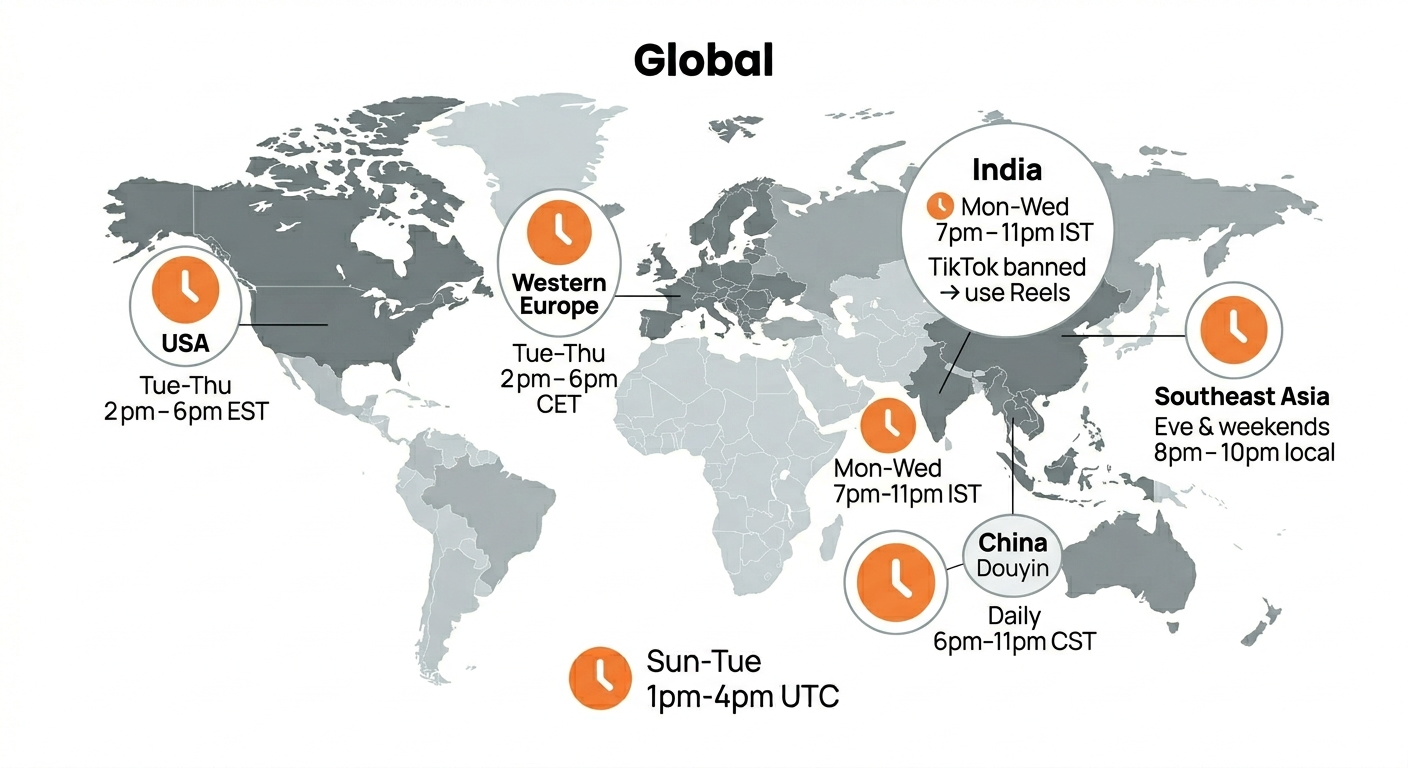
Best Time to Post on TikTok in 2026 (By Region)
Data from 2 billion TikTok engagements. Best posting times broken down by region, USA, Europe, Southeast Asia, and global audiences.
Your brand. One platform. Always on
Create, edit, and post from a single studio.
Start for freeSchedule every platform from one place, automatically.